Compression fittings are mechanical connectors used to join pipes, tubes, and hoses without welding, soldering, or threading. They are widely used across plumbing systems, hydraulic assemblies, gas lines, refrigeration units, and automotive brake lines because they create a secure, leak-resistant seal using controlled compression force.
Understanding how these fittings function helps buyers choose the right type for pressure, temperature, and material compatibility.
What Is a Compression Fitting
A compression fitting is a pipe connection device composed of three primary components
- Compression nut
- Compression ring or ferrule
- Fitting body
When the nut is tightened, it compresses the ferrule against the tubing and fitting body, creating a tight seal. This sealing method eliminates the need for adhesives or heat joining, making installation faster and safer.
These fittings are commonly manufactured from brass, stainless steel, plastic polymers, and PVC to match application requirements such as potable water, fuel systems, or pneumatic lines. When selecting the right fitting, it’s essential to choose a trusted high quality compression fitting supplier that offers quality and certified products.
Why Compression Fittings Are Essential in Plumbing and Engineering
Compression fittings are essential because they provide reliability and flexibility in fluid transfer systems. Industries prefer them for maintenance-friendly installations and easy disassembly.
Key advantages
- No special tools required: Installs easily with basic hand tools, eliminating the need for soldering or welding equipment.
- Leak-resistant sealing mechanism: Creates a tight mechanical seal that helps prevent fluid or gas leaks.
- Reusable in many applications: Can be removed and reused if components remain undamaged.
- Suitable for tight or confined spaces: Ideal for installations where space is limited or access is difficult.
- Compatible with copper, plastic, and metal tubing: Works with multiple pipe materials, making it versatile for various systems.
For buyers and engineers, these benefits translate into lower installation costs, reduced downtime, and improved system safety.
How Compression Fittings Work
The working principle of compression fittings relies on controlled mechanical deformation that converts tightening force into sealing pressure.
- The nut applies axial force as it is tightened.
- The ferrule is pushed forward and compressed.
- The ferrule slightly deforms and grips the tubing surface.
- The fitting body supports the ferrule and forms a pressure-tight seal.
This process creates both a strong mechanical hold and a leak-resistant fluid seal. Unlike threaded joints, the connection does not depend on sealants or tapes but instead on the precision compression of the ferrule and compatibility between fitting and tube materials.
In higher-pressure systems such as hydraulic lines or brake assemblies, the ferrule can bite slightly into the tubing exterior, increasing resistance to vibration, pressure fluctuations, and slippage for long-term reliability.
Types of Compression Fittings
Different applications require specialized designs. Common types include
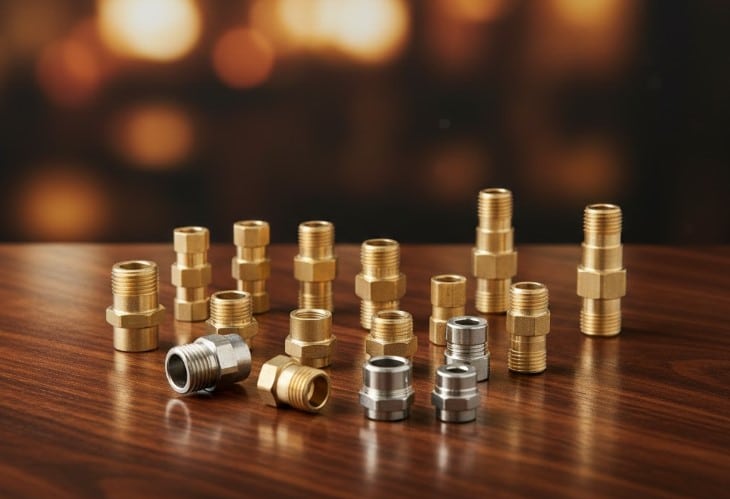
Brass Compression Fittings
Brass compression fittings are used for water supply lines, air systems, and fuel lines. Brass resists corrosion and meets potable water standards such as NSF and ASTM specifications.
Stainless Steel Compression Fittings
Stainless steel compression fittings are Ideal for chemical processing, marine systems, and high pressure environments due to superior strength and corrosion resistance.
Plastic Compression Fitting
Plastic compression fitting used in irrigation, filtration systems, and low pressure plumbing. These are lightweight, corrosion proof, and compatible with polyethylene or nylon tubing.
Plumbing Compression Fittings PVC
PVC variants are commonly installed in drainage, irrigation, and non-pressurized plumbing systems where chemical resistance is required.
Double Ferrule Compression Fittings
Double Ferrule Compression Fittings provide vibration resistance and high-pressure sealing and are popular in instrumentation systems.
Common Applications Across Industries
Compression fittings are used across multiple sectors due to their versatility
- Residential plumbing systems
- HVAC installations
- Industrial automation lines
- Oil and gas instrumentation
- Water filtration units
- Automotive fuel and brake lines
This broad usage demonstrates their adaptability and reliability across pressure ranges and fluid types. In industrial and automation setups, compression fittings often work alongside precise flow control devices like Needle Valves, ensuring accurate and leak-free performance.
Compression Fitting for Water Line Applications
Water supply installations often use compression fittings because they simplify maintenance. Homeowners and plumbers frequently select them for connecting shutoff valves, faucets, and filters.
Reasons they are preferred for water lines
- Quick installation without soldering
- Reduced fire risk compared to torch methods
- Easy replacement of components
- Certified potable water compatibility
When selecting a compression fitting for water line use, verify compliance with standards such as NSF 61 or WRAS approval to ensure safe drinking water contact.
How Do Compression Fittings Work on Brake Lines
In automotive systems, compression fittings must withstand vibration, temperature fluctuations, and hydraulic pressure. Brake line fittings use precision machined ferrules that create a strong metal-to-metal seal.
However, not all compression fittings are suitable for brake systems. Automotive manufacturers and safety standards such as SAE and DOT recommend using fittings specifically rated for brake pressure. Choosing the wrong fitting can lead to leakage or failure.
Compression Fittings vs Other Types of Fittings
| Fitting Type | Best For | Pressure Range | Tools Required | Reusable | Notes |
|---|---|---|---|---|---|
| Compression Fittings | Plumbing, hydraulic, pneumatic | Medium to high | Wrench or spanner | Yes | Creates mechanical seal; no soldering needed |
| Push-Fit Fittings | DIY plumbing, water filters | Low to medium | None | Yes | Quick installation; ideal for beginners |
| Flare Fittings | Gas lines, HVAC, brake systems | High | Flare tool | Yes | High-pressure systems; metal tubing only |
| Threaded Fittings | Industrial piping, plumbing | Medium to high | Wrenches, thread sealant | Yes | Requires tape or sealant; strong joint |
| Solvent Weld / PVC Glue | PVC plumbing, irrigation | Low to medium | Solvent cement | No | Permanent joint; chemical resistant but not reusable |
How to Install a Compression Fitting
Installing a compression fitting is straightforward but requires attention to detail to ensure a leak-free connection. Follow these steps for reliable performance:
- Cut the Tubing Squarely: Use a tube cutter to make a clean, straight cut. Avoid angled or jagged edges, as they prevent proper sealing.
- Slide the Nut and Ferrule onto the Tube: First, place the compression nut onto the tubing, followed by the ferrule in the correct orientation (tapered side facing the fitting body).
- Insert the Tubing into the Fitting Body: Push the tubing fully into the fitting until it reaches the internal stop.
- Tighten the Nut: Hand-tighten the nut first, then use a wrench to turn it an additional 1/4 to 1/2 turn (or follow manufacturer instructions). Avoid over-tightening, especially on plastic tubing.
- Check the Connection: Turn on the system and inspect for leaks. If necessary, slightly adjust the nut, but never force it beyond the recommended torque.
Proper installation ensures a secure mechanical grip and a leak-resistant seal, whether using copper, plastic, or stainless steel tubing.
FAQs
What is a compression fitting?
A compression fitting is a mechanical connector that joins pipes or tubing without soldering or threading. It uses a ferrule and nut to create a tight, leak-resistant seal.
How do compression fittings work?
They work by tightening a nut that compresses the ferrule onto the tubing, forming a secure mechanical grip and fluid-tight seal.
Where are compression fittings commonly used?
They are used in plumbing, hydraulic, pneumatic, automotive brake lines, and industrial instrumentation systems.
Can compression fittings be reused?
Yes, most compression fittings can be loosened and reused if the ferrule and tubing remain undamaged, making maintenance easier.
Conclusion
Compression fittings are versatile, reliable, and easy-to-install solutions for connecting pipes and tubing across residential, commercial, and industrial systems. Their leak-resistant sealing, compatibility with multiple materials, and reusability make them an essential choice for plumbing, hydraulic, automotive, and industrial applications.
With a variety of types, including brass, plastic, stainless steel, and double ferrule designs, these fittings offer options for every pressure range, material requirement, and installation scenario.
Partner with a Trusted Supplier
For expert guidance on sourcing, selecting, and installing high-quality compression fittings and related piping solutions across the MENA region and Africa, Luluat Al Noor Building Materials Trading LLC is your trusted partner offering professional advice, certified products, and tailored solutions to ensure durable and efficient systems.
Contact our compression fitting experts for tailored advice and solutions that guarantee durable and efficient systems.
Additional Resources for Construction & Industrial Projects
Discover guides on industrial tools, safety equipment, and building materials to power your next project.
- Top 10 Types of Building Materials Used in Construction: Essential materials shaping modern construction projects.
- Types of Grease Fittings (Zerk Fittings): Complete Guide: Ensuring smooth lubrication and reliable machinery performance with Zerk fittings
- Top 10 Essential Marine Safety Equipment Every Vessel Needs: Stay safe at sea with must-have marine gear
- Rubber Bellows and Their Industrial Application & Benefits: Flexible solutions for industrial protection and performance
- A Beginner’s Guide to Flange Types & Their Applications: A simple overview of common flange types used across industrial piping systems.