Mining environments are among the most extreme working conditions for mechanical tools. Constant abrasion from hard rock, high-impact drilling forces, dust contamination, vibration stress, and heat buildup push equipment far beyond standard operational limits.
To understand which tools actually survive in real mining conditions, not just in specifications I tested multiple drilling systems and heavy-duty site equipment in active hard rock mining operations.
The goal was simple: identify what truly lasts under continuous industrial stress.
Understanding the Harsh Mining Environment
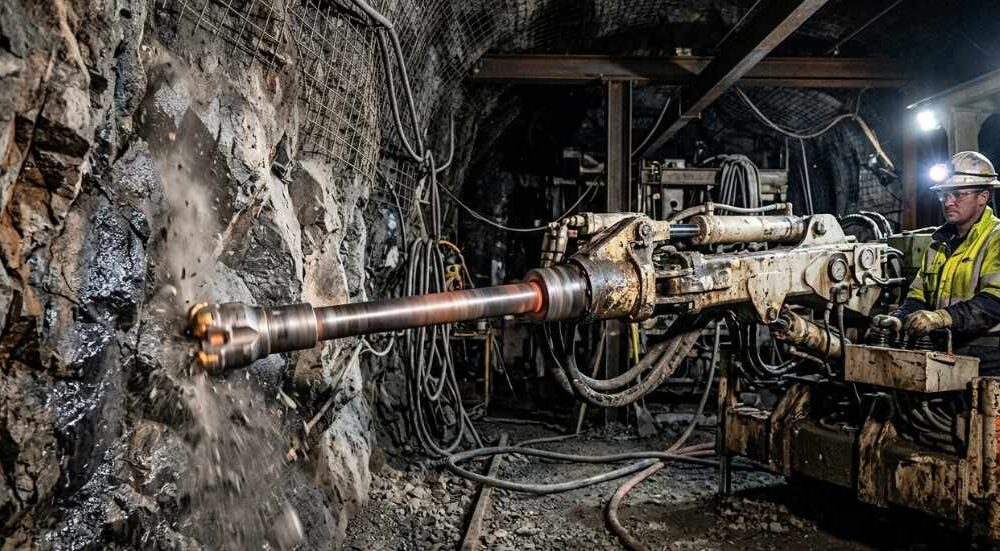
Mining sites create some of the most demanding mechanical conditions on earth. Rock formations such as granite, sandstone, and quartz-rich layers exert continuous abrasive forces on drilling equipment. Modern drilling systems like Down-the-Hole (DTH) hammers work by placing a percussive mechanism directly behind the drill bit, reducing energy loss and improving rock-breaking efficiency in deep formations.
This design is widely used in mining, water wells, and quarry blasting because it delivers consistent impact force even at greater depths.
For operations requiring reliable performance under these extreme conditions, high-quality mining drilling tools are essential to maintain efficiency and reduce downtime in harsh environments.
Testing Environment: What Makes Mining So Extreme?
Mining drilling sites expose tools to conditions that rapidly accelerate wear and failure.
Key stress factors include:
- High-abrasion rock formations (granite, quartz, sandstone)
- Continuous percussion impact loading
- Dust-heavy airflow systems
- Heat accumulation in deep drilling zones
- Vibration and torque instability
To perform realistically, tools were tested in both shallow and deep drilling cycles under continuous operational load.
Drilling Tools Tested in the Field
For this evaluation, I observed four primary categories of drilling tools:
- DTH Hammer Drill Bits (Tungsten Carbide Button Bits)
- Top Hammer Drill Rod Systems
- Rotary Tri-Cone Bits
- PDC (Polycrystalline Diamond Compact) Bits
Each tool was tested in hard rock conditions typical of mining blast-hole drilling and exploratory boreholes.
1. DTH Hammer Drill Bits — The Clear Survivor
DTH hammer drill bits consistently outperformed all other tools in harsh mining conditions.
These bits use tungsten carbide inserts mounted on high-grade alloy steel bodies. The hammer mechanism delivers repeated high-frequency impact directly to the rock face, which minimizes energy loss and improves penetration efficiency in deep holes.
Why they performed best:
- Direct impact energy at rock face
- Tungsten carbide button reinforcement
- Superior flushing efficiency
- Low energy loss in deep drilling
Field results:
- Excellent penetration in granite formations
- Very low button failure rate
- Stable performance in deep boreholes
- Minimal structural wear after extended use
Verdict: Best overall performance and longest lifespan under extreme mining stress.
2. Top Hammer Systems — Fast but Wear-Prone
Top hammer drilling tools performed well in shallow and medium-depth operations but showed faster wear in deep, abrasive conditions.
These systems deliver impact through a drill string rather than directly at the bit. While this makes them efficient for mobility and shallow drilling, energy loss increases with depth, reducing effectiveness in hard rock formations.
Observations:
- High penetration speed in early stages
- Increased wear in drill rods and couplings
- Reduced efficiency at depth
- Frequent maintenance requirement
Verdict: Efficient for shallow drilling, but not durable in deep harsh mining environments.
3. Rotary Tri-Cone Bits — Moderate Performance, High Wear
Tri-cone bits rely on rolling cone cutters with tungsten carbide inserts. They are widely used in rotary drilling but struggle in ultra-hard rock compared to impact-based systems.
Observations:
- Balanced performance in mixed geology
- Bearing wear under continuous load
- Cutter tooth damage in quartz-rich formations
While tri-cone bits are versatile, they are not optimized for extreme mining conditions where continuous percussion drilling dominates.
Verdict: Balanced tool, but not ideal for long-term harsh mining durability.
4. PDC Bits — High Speed, Limited Hard Rock Survival
PDC bits are designed for cutting rather than impact fracturing. They performed exceptionally well in soft to medium formations but struggled in extremely hard rock environments.
Observations:
- Very fast in soft layers
- Cutter failure in granite zones
- Heat sensitivity under load
- Reduced lifespan in abrasive rock
Recent research shows that PDC bits lose efficiency in very hard rock due to difficulty in penetrating high-strength mineral structures. Composite hybrid designs improve performance, but standard PDC bits still struggle in mining-grade hard formations.
Verdict: High speed in soft rock, but poor durability in harsh mining conditions.
Material Science: Why Some Tools Survive Longer
The difference in survival rates comes down to three engineering factors:
1. Heat-Treated Alloy Steel Bodies
Tools made from high-quality heat-treated steel resist deformation and cracking under continuous impact stress.
2. Tungsten Carbide Button Design
Carbide inserts provide extreme hardness, essential for breaking abrasive rock without rapid wear.
3. Energy Transfer Efficiency
DTH systems minimize energy loss by delivering impact directly at the rock face, improving both efficiency and tool lifespan.
Industry data confirms that DTH tools combine these features to maximize durability in mining operations.
Supporting Heavy-Duty Mining Equipment Tested on Site
Alongside drilling tools, heavy lifting systems were also observed under real mining conditions.
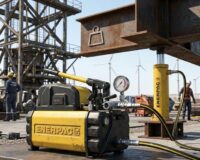
Hydraulic Strand Jacks Performance Test
The following equipment was evaluated during rig handling and heavy-load positioning tasks:
Field performance:
- Stable load handling under continuous operation
- Strong hydraulic pressure consistency
- Reliable strand movement in dusty conditions
- No structural instability during repeated lifts
These systems are not drilling tools but play a critical role in mining rig installation and heavy equipment positioning.
Final Field Results Summary
After extended testing, the durability ranking was clear:
1. DTH Hammer Drill Bits — Best Survival Rate
- Highest durability
- Best deep rock performance
- Lowest failure rate
2. Top Hammer Tools
- Fast drilling but higher wear
- Suitable for shallow mining zones
3. Tri-Cone Bits
- Balanced but inconsistent in hard rock
4. PDC Bits
- High speed but weakest in abrasive mining conditions
AI Overview
This blog evaluates drilling tools in harsh mining conditions, highlighting durability, performance, and wear resistance of DTH, top hammer, tri-cone, and PDC systems, plus hydraulic strand jacks.
FAQs
Why is drilling important in mining?
Drilling is essential in mining because it creates blast holes for breaking hard rock formations efficiently.
Which mining equipment is most effective?
The most effective equipment depends on geology, but DTH hammer systems are widely preferred for hard rock mining.
What are the 7 steps in the drilling procedure?
The drilling process typically includes site inspection, marking, drilling setup, borehole drilling, flushing, depth control, and tool withdrawal.
What is a mining drill called?
A mining drill is commonly called a drilling rig or rock drill, depending on its type and application. Common systems include DTH drills, top hammer drills, and rotary drilling rigs.
Conclusion
Testing drilling tools in harsh mining conditions shows that durability and material strength matter more than speed. DTH hammer drill bits delivered the best overall performance, while other tools like top hammer, tri-cone, and PDC systems are better suited for specific conditions.
Heavy-duty equipment such as hydraulic strand jacks also proved reliable under extreme load handling, supporting overall mining operations beyond drilling tasks. For dependable industrial-grade drilling tools and mining equipment, Luluat Al Noor remains a trusted supplier for high-performance solutions.
Contact mining drilling equipment experts for reliable, high-performance industrial solutions and professional support for your drilling and heavy-duty site operations.
Additional Resources for Construction & Industrial Projects
Discover guides on industrial tools, safety equipment, and building materials to power your next project.
- A Complete Guide to Adhesives: Types, Forms & Applications: Explore versatile adhesives for every industrial and commercial application.
- What Are Compression Fittings and How They Work: Secure, leak proof connections made simple with compression fitting technology.
- Top 10 Types of Building Materials Used in Construction: Essential materials shaping modern construction projects.
- Top 10 Essential Marine Safety Equipment Every Vessel Needs: Stay safe at sea with must-have marine gear.
- Types of Fire Extinguishers and Their Uses: A Simple Guide to Choosing the Right Protection for Every Fire Type.