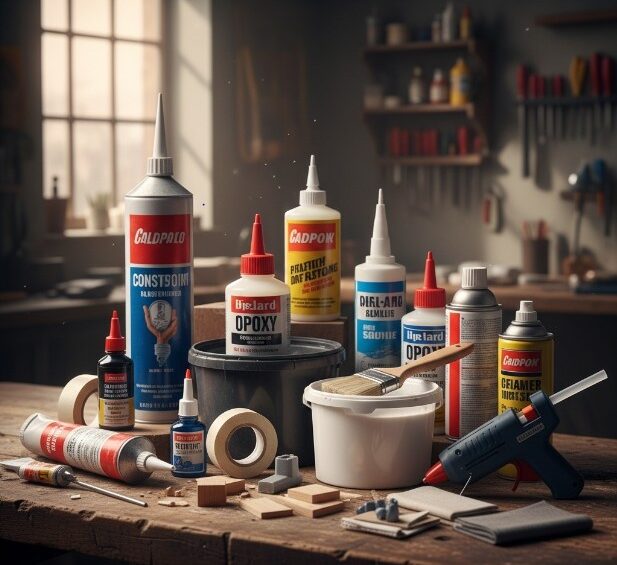
Adhesives are essential materials used across manufacturing, construction, automotive, electronics, and packaging industries. From assembling aircraft components to sealing household fixtures, they enable strong, reliable bonding where mechanical fasteners may fail.
Understanding how they work, their chemical compositions, and their practical uses helps engineers, buyers, and technicians select the right product for performance, durability, and cost efficiency.
What Is an Adhesive?
An adhesives product is a substance designed to hold two surfaces together through surface attachment and internal strength. Unlike welding or bolting, it distributes stress evenly across bonded surfaces, reducing structural fatigue.
Modern bonding agents are formulated with polymers, resins, additives, and curing systems, similar to those used in professional grade industrial adhesives designed for demanding engineering environments.
How Adhesives Work?
The science behind bonding relies on mechanical interlocking, chemical bonding, and intermolecular forces. When applied, the material wets the surface, penetrates microscopic pores, and forms a physical and molecular connection.
Advanced adhesive technology enhances this process by optimizing viscosity, curing speed, and cross linking density. Manufacturers like 3M and Henkel invest heavily in research to improve adhesion performance under extreme environments.
Different Forms of Adhesives
Adhesives are produced in multiple physical forms to suit application methods, automation needs, and substrate compatibility.
Liquid Adhesives
Liquid systems provide excellent surface wetting and penetration. These are widely used when precise spreading or thin bond lines are required in industrial assembly.
Paste Adhesives
Thicker formulations resist dripping and allow gap filling. They are ideal for uneven surfaces and vertical bonding tasks.
Film and Tape Adhesives
Pre applied formats offer consistent thickness and clean installation. Electronics, automotive trim, and signage industries rely heavily on these solutions.
Solid Adhesives
Thermoplastic sticks or pellets melt during application and solidify upon cooling, a principle used in production grade hot-melt adhesives that support high speed manufacturing.
Types of Adhesives
Selecting among the many types of adhesives requires understanding their chemistry, curing mechanism, and performance characteristics. Each category serves specific materials, environments, and load requirements.
Hot Glue Adhesive
Hot glue is a thermoplastic adhesive applied in molten form and hardened by cooling. It is widely used where speed and convenience are priorities.
- Bonds quickly without chemical curing
- Penetrates pores for mechanical grip
- Suitable for crafts, packaging, and wiring
- Available in industrial high temperature grades
Cyanoacrylate Adhesive
Commonly known as super glue, cyanoacrylate forms strong bonds almost instantly and is used for precision applications.
- Cures within seconds
- Performs well under pressure loads
- Bonds metals, plastics, and ceramics
- Used in electronics and manufacturing
Polyvinyl Acetate Adhesive
PVA glue is a versatile thermoplastic adhesive widely used for porous materials, especially wood.
- Available as liquid or stick format
- Ideal for woodworking and crafts
- Indoor and waterproof outdoor variants
- Can function as a surface sealant
Pressure Sensitive Adhesive
A pressure sensitive adhesive bonds through applied pressure alone without heat or solvent activation. It is widely used for tapes and labels.
- Instant adhesion with light force
- Found in masking and insulation tapes
- Often coated onto flexible backings
- Some grades allow repositioning
Epoxy Adhesive
An epoxy adhesive is a two component system consisting of resin and hardener that chemically react to form extremely strong bonds.
- Resistant to chemicals, moisture, and corrosion
- Excellent for metal and glass bonding
- Used in engineering and vehicle manufacturing
- Offers long shelf life
Acrylic Adhesive
An acrylic adhesive is valued for versatility and outdoor durability, bonding a wide range of substrates.
- Works on plastics, wood, and stone
- Resists ultraviolet exposure
- Available in one or two part systems
- Suitable for signage and glazing
Contact Adhesive
Contact adhesives bond instantly when coated surfaces touch, making them ideal for rapid installation tasks.
- Effective on porous and non porous materials
- Used for laminates, rubber, and carpets
- Available in solvent or water based formulas
- Can be brushed or sprayed
For laminates, rubber, and panel installations, professionals often rely on proven formulations such as 3M™ fastbond™ contact adhesive 30NF to ensure consistent bonding performance.
Silicone Adhesive
Silicone adhesives are flexible and weather resistant bonding compounds widely used in construction and electronics.
- Withstands temperature changes
- Maintains elasticity after curing
- Reduces vibration stress
- Bonds diverse materials
Polyurethane Adhesive
A polyurethane adhesive provides strong, flexible bonding across porous and non porous substrates.
- Suitable for indoor and outdoor use
- Bonds wood, foam, plastics, and stone
- Expands to fill gaps
- Retains strength over time
Anaerobic Adhesive
Anaerobic adhesives cure only without oxygen and in contact with metal ions, making them ideal for mechanical assemblies.
- Commonly used as threadlockers
- Prevents vibration loosening
- Seals threaded joints
- Fully cures within about 24 hours
Hybrid Adhesives
Hybrid adhesives combine multiple chemistries to deliver blended performance advantages.
- Offers strength and flexibility together
- Can provide fast curing and durability
- Suitable for sealing and structural bonding
- Increasingly used in advanced manufacturing
Phenolic Adhesive
Phenolic adhesives are high performance formulations engineered for extreme loads and temperatures.
- Resistant to cracking and deformation
- Handles heavy duty industrial stress
- Used in aerospace and composites
- Provides long lasting performance
Polyimide Adhesive
Polyimide adhesives are specialty high temperature bonding systems designed for technical environments.
- Excellent thermal stability
- Bonds metals, ceramics, and plastics
- Available in different viscosities
- Used in electronics and insulation systems
Structural vs Non Structural Bonding
A structural adhesive is designed to carry significant loads and often replaces mechanical fasteners. These products are used in transportation, infrastructure, and heavy equipment manufacturing.
Non structural products serve positioning, sealing, or lightweight joining tasks. They are common in crafts, packaging, and decorative installations.
Industrial Applications of Adhesives
Modern adhesive applications span nearly every sector because bonding technology allows lighter designs, improved durability, and better aesthetics.
Construction Industry
Construction adhesives are used for flooring, insulation panels, façade cladding, and wall systems, while surface finishing often requires high strength tile adhesives for secure installation. They reduce vibration and distribute load stress more evenly than screws or nails.
Automotive Manufacturing
Lightweight vehicle design has increased reliance on automotive adhesives for bonding aluminum, composites, and polymers without corrosion or distortion.
Companies like Sika develop high performance formulations specifically for transportation and infrastructure engineering.
Electronics and Electrical Systems
Adhesives in electronics act as insulators, thermal conductors, and vibration dampeners, and advanced assemblies frequently depend on specialized conductive adhesives for circuit stability.
Precision dispensing ensures component stability without adding weight or interfering with circuitry.
Packaging and Consumer Goods
Fast setting adhesive systems improve production speed while maintaining strong seals. Flexible formulations prevent cracking during shipping and storage.
Choosing the Right Adhesive
Selecting the right product depends on substrate type, load requirements, environmental exposure, and curing conditions. Material compatibility is especially important when working with metals, plastics, or composites.
When determining the best adhesive for metal, consider surface preparation, corrosion resistance, and temperature range. Epoxy and acrylic systems are typically preferred for high strength metallic bonding.
Professionals evaluating types of adhesives should also assess:
- Cure time versus production speed
- Flexibility versus rigidity
- Chemical resistance
- Cost efficiency
- Shelf life
Performance Factors That Affect Bond Strength
Several variables influence long term bonding reliability.
Surface cleanliness is critical because oils, dust, and oxidation reduce adhesion. Temperature and humidity also affect curing reactions and final strength.
Proper application thickness ensures stress distribution and prevents premature failure. Skilled technicians follow manufacturer specifications carefully to achieve optimal results.
FAQs
What is the strongest adhesive for heavy duty applications?
Structural grade epoxies are typically the strongest option. They provide high load capacity and excellent resistance to heat and chemicals.
How do I choose the right adhesive for my project?
Match the adhesive to substrate type, environment, and load requirements. Technical datasheets help compare strength, curing time, and compatibility.
Can adhesives replace mechanical fasteners?
Yes, structural bonding solutions can replace screws or rivets. They distribute stress evenly and reduce material fatigue.
How long does adhesive take to cure?
Curing time depends on chemistry and temperature conditions. Some set in seconds while others require several hours for full strength.
Conclusion
Adhesives play a critical role in modern engineering, manufacturing, and construction by enabling efficient, durable bonding solutions across diverse materials and environments. Understanding their forms, chemistries, and performance factors allows professionals to select solutions that ensure safety, efficiency, and longevity.
For expert guidance on sourcing, selecting, and applying high performance adhesive solutions tailored to industrial and commercial needs across the MENA region and Africa, Luluat Al Noor Building Materials Trading LLC is your trusted partner delivering certified products, technical expertise, and dependable supply support.
Contact our adhesive consultants today for expert product selection, formulation guidance, and application support tailored to your project requirements.
Additional Resources for Construction & Industrial Projects
Discover guides on industrial tools, safety equipment, and building materials to power your next project.
- What Are Compression Fittings and How They Work: Secure, leak proof connections made simple with compression fitting technology.
- Top 10 Types of Building Materials Used in Construction: Essential materials shaping modern construction projects.
- Types of Grease Fittings (Zerk Fittings): Complete Guide: Ensuring smooth lubrication and reliable machinery performance with Zerk fittings
- Top 10 Essential Marine Safety Equipment Every Vessel Needs: Stay safe at sea with must-have marine gear
- Rubber Bellows and Their Industrial Application & Benefits: Flexible solutions for industrial protection and performance